Recurring Invoices: Automate Billing for Clients
If you bill the same client the same amount every month, you should not be building that invoice from scratch every time. Here is how to set up recurring billing properly.

Retainer clients, monthly service contracts, subscription-style billing — if any part of your business bills the same client a predictable amount on a predictable schedule, you are doing unnecessary manual work every time you rebuild that invoice from scratch.
Who actually needs recurring invoices
This is not just for SaaS businesses. A social media consultant on a monthly retainer, an accountant billing a fixed monthly fee, a gym or studio charging membership, a property manager collecting rent — anyone with a repeating, predictable charge benefits from not re-creating that invoice by hand every cycle.

What can go wrong with manual repeat billing
The risk with doing it by hand every month is not the maths — it is forgetting. A busy week slips by, the invoice goes out four days late, and the client's payment (which was fine on time) now looks late too, purely because you were the bottleneck. Manual repeat billing also invites small copy-paste errors that compound over months.
A missed recurring invoice does not just delay one payment — it delays every payment after it, since most clients pay on a rhythm keyed to when they receive the bill, not a fixed calendar date in their head.
Setting it up once
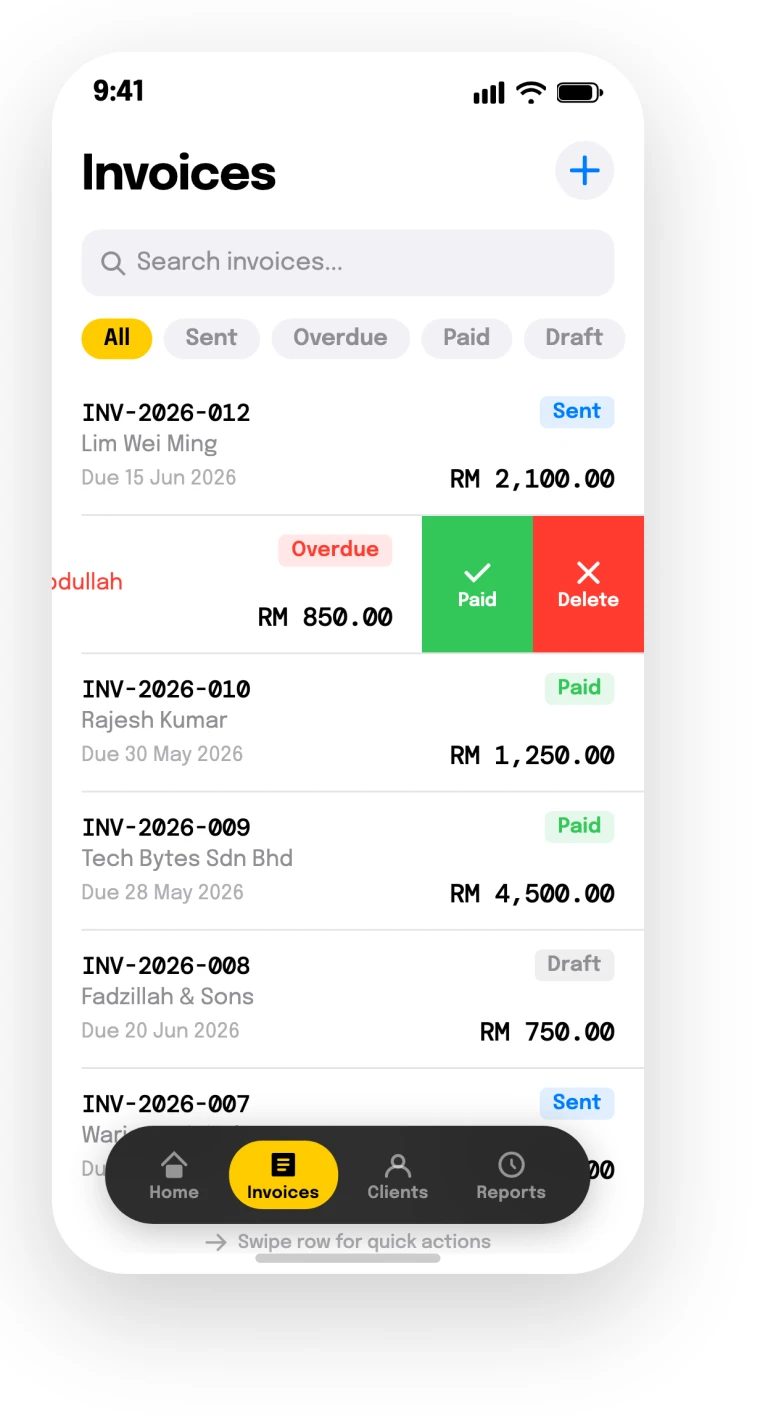
The fix is straightforward: save the client, the line items, and the amount once, and let the invoice regenerate on schedule instead of from memory. Faktur.my keeps your client and item details on file, so turning last month's retainer invoice into this month's takes seconds rather than starting from a blank document.
The bottom line
Predictable billing should not require you to remember it every single month. Set the pattern up once, and let your invoicing tool carry the load — your retainer clients will notice the consistency even if they never think about why.
FAQ
What is a recurring invoice?
A recurring invoice is one issued on a repeating schedule — weekly, monthly, or another interval — to the same client for the same or a similar amount, typically for retainers, subscriptions, or ongoing service contracts.
Who should use recurring invoices?
Any business billing a predictable amount to the same client on a regular cycle — consultants on retainer, subscription services, gyms and studios with memberships, and property managers collecting rent are common examples.
What happens if a recurring invoice is sent late?
It shifts the client's whole payment rhythm later, not just that one payment — most clients pay based on when they receive the invoice, so a late invoice tends to produce a late payment even if the client would otherwise have paid on time.
Can I duplicate a previous invoice instead of building a new one?
Yes — Faktur.my lets you duplicate an existing invoice and adjust the date, which is the fastest way to handle repeat billing for the same client and line items each cycle.
Try it for yourself
Invoices, quotes, payslips, and statements — built for Malaysian businesses. Free to download.