
Quotation vs Invoice: What's the Difference?
A quote and an invoice look similar but do completely different jobs. Here is exactly when to send which one — and how to move from one to the other without redoing your work.

New business owners mix these up constantly, and it is an easy mistake — a quotation and an invoice can look almost identical on the page. But they serve completely different purposes, and sending the wrong one at the wrong time makes you look disorganised at best and creates real confusion at worst.
The one-line difference
A quotation is a price offer sent before work begins. An invoice is a request for payment sent after the work is done (or the goods delivered). One comes before the agreement; the other comes after.
What each one needs to contain
- Quotation: item descriptions, quantities, unit prices, total price, a validity period ("valid for 14 days"), and your proposed payment terms
- Invoice: your SSM registration number, a unique invoice number, the issue and due dates, a line-by-line breakdown, and the total amount owed

Is a quotation legally binding?
Generally, no — a quotation is an offer, not a contract, and remains non-binding until the customer accepts it (often by issuing a purchase order or simply confirming in writing). An invoice, once issued for completed work, is a formal record of what is owed and carries far more weight if a payment dispute ever arises.
A useful test: if the customer could still say "actually, let's not proceed" without owing you anything, you are still in quotation territory. Once they have committed and the work has started, you are moving toward an invoice.
The typical flow for a Malaysian SME
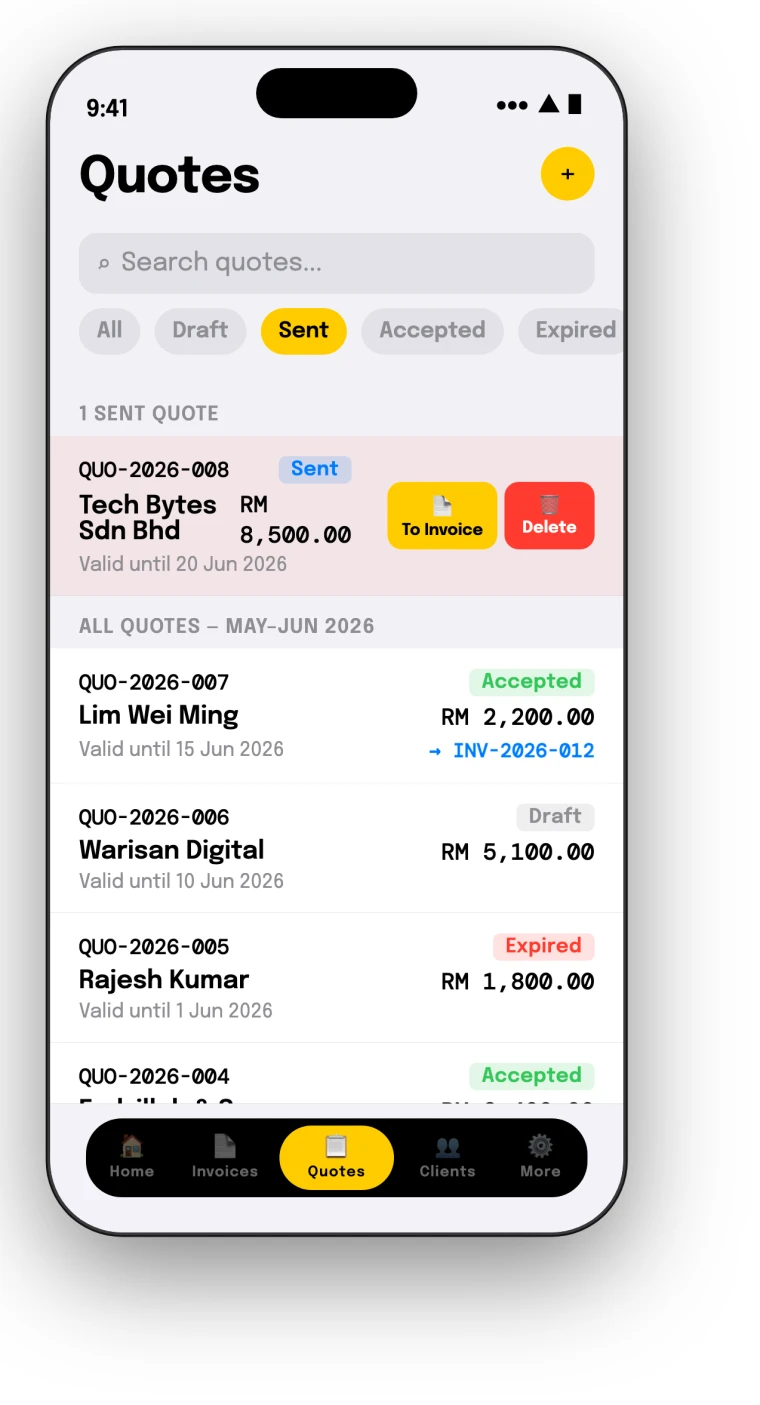
Quote first, then wait for the client to accept — sometimes formally with a purchase order, sometimes with a simple "go ahead." Complete the work. Then issue the invoice. In Faktur.my, once a quotation is accepted, you convert it into an invoice in one tap — every line item and price carries over, so you are not retyping the same numbers twice.
The bottom line
Quote before the work, invoice after. Get that sequencing right and both documents do their job — one sets expectations, the other gets you paid — without either one being mistaken for the other.
FAQ
What is the main difference between a quotation and an invoice?
A quotation is a price offer sent before work begins and is generally non-binding. An invoice is a formal request for payment sent after work is completed or goods are delivered, and it becomes an official record of what is owed.
Is a quotation the same as an invoice in Malaysia?
No. In Malaysia, a valid tax invoice must carry your SSM registration number, a unique sequential invoice number, and (for MyInvois purposes) is the document that gets validated by LHDN — a quotation is not.
Can a quotation become an invoice?
Yes — once a client accepts a quotation, the same line items and pricing typically carry directly into the invoice. Good invoicing software converts an accepted quote into an invoice automatically instead of requiring you to retype it.
Is a quotation legally binding?
Generally not until the customer accepts it. A quote is an offer; it only becomes a commitment once the client agrees to proceed, often via a purchase order or written confirmation.
Try it for yourself
Invoices, quotes, payslips, and statements — built for Malaysian businesses. Free to download.