Multi-Currency Invoicing: A Guide for Freelancers
Billing an overseas client in USD or SGD instead of RM changes more than the currency symbol. Here is how to invoice international clients properly from Malaysia.

The moment your client base extends beyond Malaysia, invoicing gets a little more complicated. A US client does not think in ringgit, and forcing them to convert RM to USD in their head before they pay is friction you do not need. Here is what actually changes when you start invoicing internationally.
Bill in the client's currency, not just yours
An invoice quoted in the currency your client actually pays in is easier to approve, easier to reconcile against their own budget, and generally gets processed faster — especially for corporate clients whose finance teams work in a single reporting currency.

What still has to be in ringgit
Even when you invoice a client in USD or SGD, your own accounting and any Malaysian tax obligations are still tracked in ringgit. Keep a record of the exchange rate you used at the time of invoicing, since that is the rate relevant to your bookkeeping — not whatever the rate happens to be when the client eventually pays.
Pick your invoicing currency deliberately, not by accident. Once a client is used to seeing invoices in USD, switching them to RM mid-relationship creates unnecessary confusion.
Payment methods for cross-border clients
DuitNow QR and local bank transfer work well for Malaysian clients, but an overseas client usually needs a wire transfer or an international payment platform instead. Make sure your invoice clearly states the payment route that actually applies to that specific client — a Malaysian bank account number is not useful to someone paying from abroad.
The bottom line
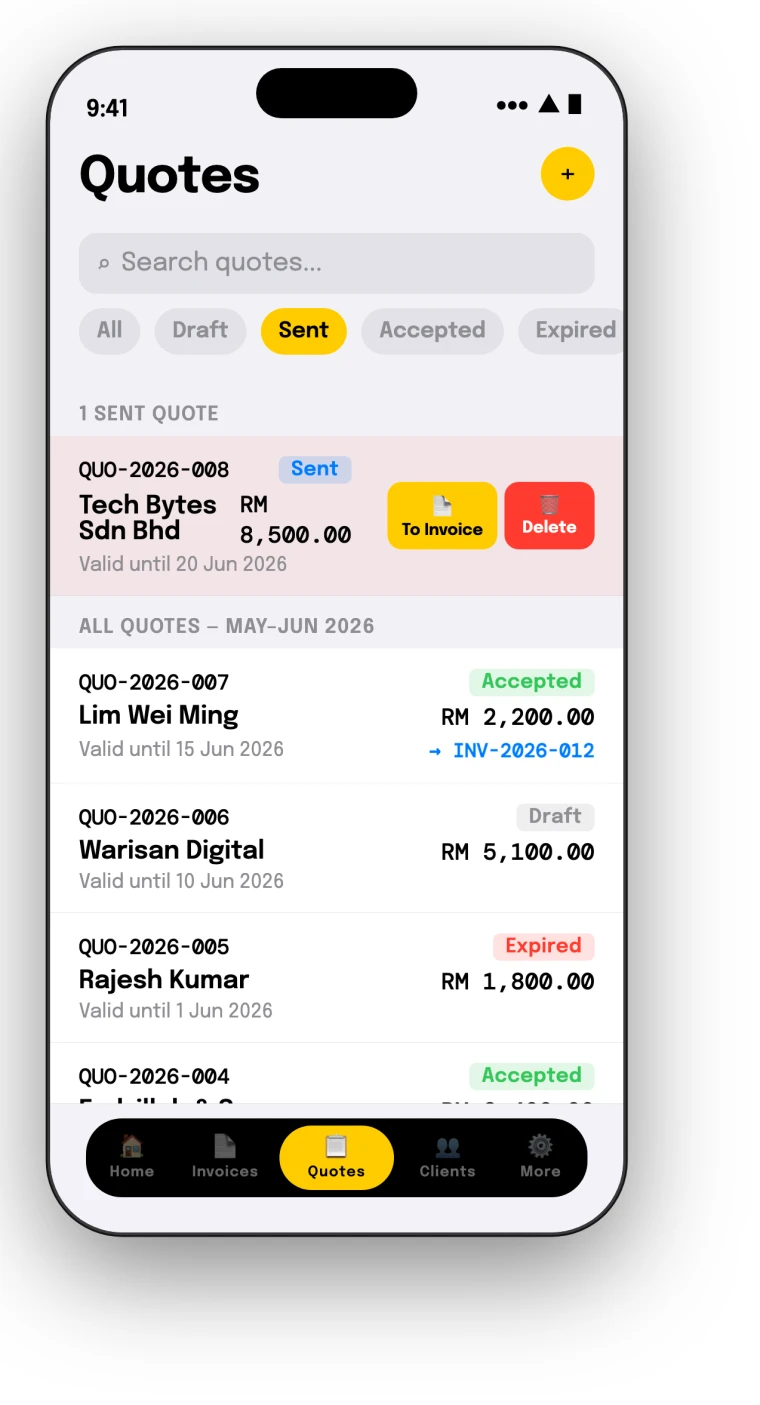
Invoicing overseas clients well is mostly about removing friction on their end while keeping your own records straight on yours. Faktur.my lets you set the invoice currency per document while your business records stay consistently in ringgit — so international work does not mean juggling two systems.
FAQ
Should I invoice international clients in ringgit or their local currency?
Generally, invoice in the client's own currency where practical — it's easier for them to approve and reconcile. Your own accounting and any Malaysian tax reporting should still be tracked in ringgit using the exchange rate at the time of invoicing.
What exchange rate should I use for a multi-currency invoice?
Use the exchange rate at the time you issue the invoice, and keep a record of it for your own bookkeeping — not the rate on the day the client eventually pays, which may have moved.
How do overseas clients pay a Malaysian freelancer?
Typically via international wire transfer or a cross-border payment platform, rather than DuitNow QR or local bank transfer, which are built for domestic Malaysian payments.
Can I switch invoice currency for different clients in Faktur.my?
Yes — you can set the currency per invoice, so a domestic client is billed in RM while an overseas client is billed in USD, SGD, or another currency, without changing how your own records are kept.
Try it for yourself
Invoices, quotes, payslips, and statements — built for Malaysian businesses. Free to download.